Basement Flooding Cleanup in Redmond, WA
Daylight basements on Education Hill and the Redmond Ridge plateau sit into the hillside, so water collects at the uphill wall. The basement crew extracts it and dries the level to the S500 goal.
(888) 509-1696Start the Redmond basement dry-out now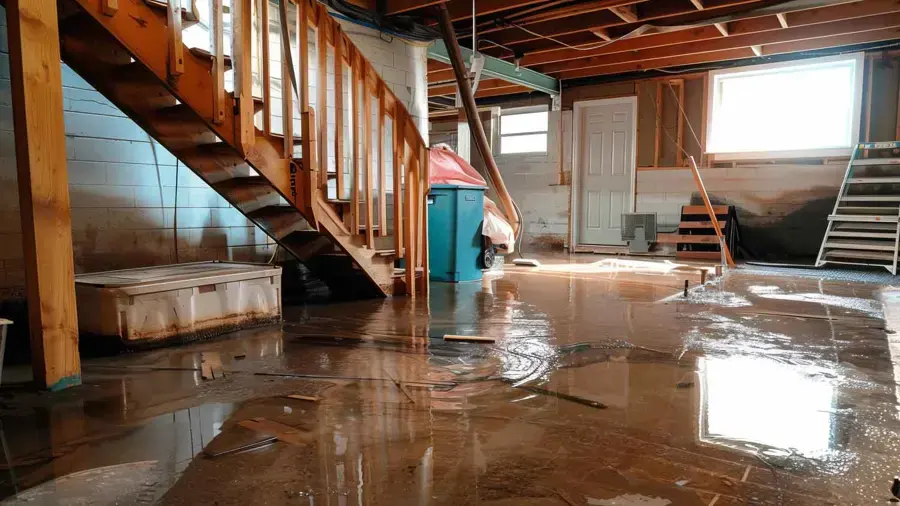
What to do when the basement floods in Redmond
- Stop the water Close the main, or the cold supply on the water heater.
- Cut power downstairs Only from a dry panel, and only if you can reach it safely.
- Lift contents Get boxes and electronics off the floor and away from the wet wall.
- Pull back rugs Area rugs trap water against the floor; move them to a dry spot.
What does basement flooding cleanup cost in Redmond, WA?
In Redmond, WA, basement flooding cleanup typically runs $2,000 to $10,000. The drivers are the water category, how much of the level got wet, whether carpet and finished drywall are involved and how fast drying started.
Unfinished or one room
- Extraction
- Slab and wall drying
- Daily readings
Finished basement, clean water
- Pad replacement
- Baseboard removal
- Cavity drying
Outside water or whole level
- Drywall and carpet removal
- Antimicrobial treatment
- Extended drying
For a planning range on your own loss, try the water damage cost calculator. The restoration contractor who responds sets the real scope after the moisture map.
How basement flooding cleanup is handled in Redmond, WA
- MI1
Extract the floor
The extraction crew clears standing water from the slab, carpet and pad.
- MI2
Open what is wet
Baseboards come off and cavities are opened where readings say water is inside.
- MI3
Dry below grade
LGR dehumidifiers sized for a cool basement run until readings reach the goal.
Most Redmond basements are daylight basements: the back wall is below grade on the uphill side and the front opens onto the yard. That uphill wall is where winter groundwater and roof runoff press against the foundation. Inside, the losses are usually plumbing: a water heater in the utility room, a laundry line or a burst pipe in the ceiling above.
Finding the source matters
- A supply line or water heater: clean water, often dried in place if drying starts quickly
- Seepage through the uphill wall: outside water, handled as Category 3
- A floor drain backing up: sewage, see sewage backup cleanup
The source sets the category, and the category decides whether carpet, pad and drywall are dried or removed.
How a flooded basement is dried
The extraction crew clears the standing water, then the tech who does the walkthrough maps the moisture in the slab edge, the bottom plates and the drywall. Baseboards come off and small holes may be drilled to dry wall cavities. The drying team sets LGR dehumidifiers sized for a below-grade space, where cool slab temperatures slow evaporation, and logs readings until they reach the goal.
Water across the basement floor? Shut off the water heater and the main if the leak is plumbing.
Get the Redmond basement drying started, (888) 509-1696Carpet, pad and finished walls
Carpet over a clean-water loss can often be dried after the pad is replaced. Drywall that wicked clean water is often saved; drywall that sat in outside water is cut out. EPA home mold cleanup advice covers why basements need fast drying, and Ready.gov covers electrical safety in flooded lower levels. See also water heater failure cleanup.
Water damage restoration across Redmond and the Eastside
The Redmond restoration crew covers ZIPs 98052, 98053 and 98073, from the Sammamish Valley floor and Education Hill to Redmond Ridge and Union Hill, plus Kirkland, Woodinville, Bellevue and Sammamish.
See every neighborhood and ZIPRelated water damage services in Redmond
Basement Flooding Cleanup questions in Redmond, WA
Why does water come through the uphill basement wall?
In a daylight basement the uphill wall holds back soil that fills with water in long rains. When the drain around the footing is clogged or missing, water pushes through cracks and the floor joint.
Can a finished basement be dried without tearing it out?
Often, when the water was clean and drying starts quickly. Baseboards come off, small holes let air into the cavities, and drywall is saved if readings come down.
How long does basement drying take?
A contained clean-water loss usually dries in three to five days. Concrete and below-grade walls can take longer because cool surfaces dry slowly.
Is basement flooding covered by insurance?
A burst pipe or failed water heater is often covered. Seepage and groundwater usually are not. Coverage depends on your policy, so it is worth checking with your own insurer.
Should the carpet come out?
The pad usually does. Carpet over a clean-water loss can often be dried and relaid; carpet in outside or sewage water is removed.
What stops it from happening again?
Clear downspouts and extend them, check the grade on the uphill side, and have the footing drain inspected if water keeps coming through the wall.
Basement Flooding Cleanup in Redmond, day or night
Water keeps moving into drywall, pad and framing until someone pulls it out. The Redmond restoration crew extracts, dries to the S500 goal and documents the loss.
- Redmond, WA and the Eastside
- Open every hour, every day